For three decades, we have held an image of Michael Jordan in our collective mind. It is an icon forged in fire, cast in steel, and polished to a defiant shine.
It is the image of the Jumpman, silhouetted against the sky. It is the "Shrug" against Portland. It is the "Flu Game" in Utah. It is the six rings, the cigar, the smirk, and the terrifying, joyful dominance of a man who did not just play a sport, but bent an entire era to his will.
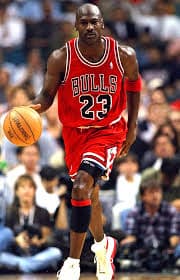
Michael Jordan is not just a "former athlete"; he is the modern embodiment of victory. He is the fortress, the terminator, the killer who famously "took it personally" and built his legend on the graves of his rivals' expectations.
And then, last week, the fortress cracked.
In a rare, candid public moment, the 62-year-old billionaire did the one thing the icon is never supposed to do: he looked weak. He became emotional. He cried. And then, he confessed.
When asked if he missed the game, the mask of the billionaire owner and the brand fell away, and the "killer" from North Carolina was left, raw and exposed. He admitted, with a profound sadness, that he misses it so much he would "take a pill" to go back and play again.
This is not simple nostalgia. This is not an old man fondly remembering his youth.
This is the sound of the world’s greatest warrior admitting that "peace" is a special kind of hell. It is the tragic, humanizing confession of a man who conquered the world and, in doing so, lost the one thing that gave him life: the war.
Part 1: The Curse of the "Last Dance"
To understand why a man who has everything would trade it all for one more game, we must first revisit who he is. The 2020 documentary The Last Dance was not just a celebration; it was a psychological profile.
It revealed, in stark detail, that Michael Jordan was not fueled by a love of winning. He was fueled by a pathological hatred of losing. More than that, he was fueled by conflict.
His entire psyche is built on the premise of "us vs. them." He needed an enemy. If one did not exist, he invented one.
- LaBradford Smith scores on him? He invents a "nice game" snub to fuel a 47-point explosion.
- George Karl doesn't say "hello" at a restaurant? He takes it as a personal slight and dismantles the SuperSonics.
- Jerry Krause wants to rebuild? He wages a psychological war to keep his team together for one... last... dance.
This is the "Terminator" problem. A machine built for a single, defining purpose—to seek and destroy on the basketball court—cannot simply be "reprogrammed" for peacetime. It cannot be "retired." It can only be mothballed.
For twenty-plus years, Jordan has been mothballed. And his confession reveals a devastating truth: the internal fire that made him the GOAT did not extinguish when he retired. It simply lost its fuel source. And ever since, it has been burning the host from the inside out.
Part 2: The Fantasy of the "Pill"
Let’s analyze the quote. "I would take a pill to go back."
This is not a wistful "I wish I was young again." It is a fantasy of efficacy. He does not miss the fame, the money, or the adulation. He misses the power. He misses the stakes. He misses the feeling of walking into a hostile arena, 35,000 people screaming for his failure, and knowing—with an absolute, sociopathic certainty—that he was going to break their hearts.
He misses the "Flu Game," when his body had given up, but his will refused. He misses the "Last Shot," with Bryon Russell stumbling, the world in slow motion, and the knowledge that the ball was going in.
This is the one war Michael Jordan cannot win. He defeated Bird. He defeated Magic. He defeated Isiah, Drexler, Ewing, Barkley, and Malone. But he stands, undefeated, against the one opponent who is guaranteed to win: Father Time.
The "pill" is a tragic metaphor. It is a wish for a cheat code against the only game he has ever been forced to lose. He is a 62-year-old man trapped in the mind of a 28-year-old assassin, and his tears are the sound of that cognitive dissonance. He has the knowledge and the will, but the vessel is gone.
Part 3: The Empty Throne – Why the "Second Act" Was Never Enough
This is not a new feeling for Jordan. This is the defining crisis of his post-Bulls life. He has tried, repeatedly, to find a "proxy" for the war, and he has failed every single time.
Act 1: The Baseball Experiment (1993) When he first retired, at the peak of his powers, he lasted less than a year before the "itch" drove him to the brink. His solution? To try to conquer a different sport. His foray into baseball was not a "whim." It was a desperate attempt to find a new mountain to climb, a new set of stakes, a new way to compete. He needed the "grind." He needed the "fight." He failed, but the attempt itself was the proof: he cannot sit still.
Act 2: The Wizards Comeback (2001) The "itch" came back. This time, he did take the "pill." He tried to will himself back into being Michael Jordan. And for brief, tantalizing moments, he was. But the Wizards comeback was, ultimately, a tragedy. It was the first time we saw him as a mortal. He was a 38-year-old man trying to do a 28-year-old's job. He proved that even his will had a physical limit. It was the first time he had truly lost to Father Time.
Act 3: The Owner's Box (2010-2023) This may have been the most exquisite, personal form of torture. As the owner of the Charlotte Hornets, he was once again at the arena. He was in the war. But he was in the owner's box, not on the court.
He had to watch.
Imagine being the greatest predator in history, and being forced to sit in a cage while you watch less-talented predators fail, over and over, to make the kill. He had all the knowledge, all the answers, all the will—and zero control. He couldn't check himself into the game. He had to trust others to execute.
And for a man whose entire philosophy is "I will do it myself," trusting others is impossible. His tenure as an owner was a failure. He could not will his players to have his fire. And this impotence, this separation of will from action, must have been a living hell.
Act 4: The Proxies (Golf, Gambling, Fishing) He tries to sublimate the "itch." Golf, fishing, high-stakes gambling... these are all proxies for competition. They are outlets. They provide a "hit" of the drug. But they are a pale, hollow imitation.
Winning a $100,000 bet on a golf course is not the same as walking into the Delta Center for Game 6. Winning a fishing tournament (the very setting for his emotional confession) is not the same as hearing 80,000 people go silent as you hold a championship trophy.
The proxies are not enough. The itch remains.
Part 4: The King in Winter
Why now? Why is the armor cracking at 62?
Because The Last Dance was a double-edged sword. It was, on one hand, the final, definitive coronation. It cemented his GOAT status for a new generation. But on the other hand, it was a living funeral. It forced him—and the world—to re-live his greatness, to feel that "itch" in high-definition.
That documentary was the equivalent of giving a recovering addict a "greatest hits" compilation of their best high.
His new, raw vulnerability is the after-effect. He is no longer the player. He is no longer the owner. He is just Michael Jordan, the brand, the ghost.
This is the "King Lear" phase of his life. He is the all-powerful ruler, stripped of his kingdom and his power, raging against the storm of his own mortality. He sees a new generation (LeBron, Steph, Jokic) on his throne, in his league, and he is powerless to stop them.
His tears are not weakness. They are rage. They are the rage of a king in exile.
Conclusion: The Man Who Can't Come Home
The vulnerability of Michael Jordan is, in the end, the final, humanizing chapter of his myth. It is also a profound, existential warning.
It is a warning about what happens when a man whose entire identity is fused with the fight suddenly has no one left to fight.
Michael Jordan's tragedy is not that he lost. His tragedy is that he won, absolutely, and the game ended. He finished the one thing that gave his life meaning, and he has been wandering the earth for 20 years trying to find a replacement.
He can never find one.
He is the ghost in the arena, the king who can never return to his throne. This confession—that he would "take a pill" to go back—is the ultimate admission of his curse. The very fire that made him a god is the same fire that denies him, as a man, any hope of peace.