In the bright, chaotic, and deafeningly loud new era of Formula 1, the American narrative has been defined by two things: spectacle and celebrity.
First came Miami: a neon-pink, artificial-marina-infused party where the race itself felt secondary to the star-studded grid. Then came Las Vegas: a billion-dollar, self-promoted neon supernova, a Saturday night race down the Strip that was the ultimate expression of sport-as-entertainment.
These two events are the "shock and awe" campaign in Formula 1’s conquest of America. They are the sizzle. They are the hype.
But this week, the most important, tectonic-shifting move in this American conquest was made. And it had nothing to do with street circuits, celebrities, or artificial harbors.
Formula 1 has quietly, and profoundly, signed a ten-year contract extension with the US Grand Prix at the Circuit of the Americas (COTA) in Austin, Texas, anchoring the race to the calendar until 2034.
This is not just another renewal. This is the "Declaration of Permanence."
In a sport where classic European tracks beg for two-year deals, a ten-year commitment is the equivalent of a lifetime appointment. It is a statement of intent from F1’s owners, Liberty Media, that while Miami and Vegas may be the glamorous new fortresses, Austin is the capital. It is the strategic anchor, the spiritual home, and the blueprint for the very success that made the other races possible.
This deal is the final, stabilizing pillar in F1’s new, American-centric empire. To understand why it matters, one must first understand the decades of failure that preceded it.
Part 1: The "Graveyard of Empires" – F1’s Decades of Failure in America
For 50 years, America was the market that Formula 1—a deeply Euro-centric, insular, and arrogant sport—could not crack. It was a graveyard of good intentions and embarrassing failures.
The sport’s leadership simply did not understand the American sports fan. They staged races in the parking lot of Caesars Palace in Las Vegas (1981-82). They ran a farcical race through the streets of Dallas (1984), where the track literally melted under the Texas sun. They raced in Phoenix, Detroit, and Long Beach, but nothing ever stuck.
The ultimate humiliation came in 2005 at the Indianapolis Motor Speedway. In what is now known as "Tyre-gate," all 14 cars running Michelin tires were deemed unsafe to race, leaving only the six Bridgestone-shod cars (including Ferrari) to perform a pathetic, processional "race" in front of 100,000 booing American fans.
It was a catastrophe. It destroyed the sport's credibility in the US for a generation. F1 retreated, humiliated, its American dream in ashes.
For years, the sport was absent. The consensus was clear: America was a "NASCAR country." F1 was too complex, too foreign, and too boring for the American palate.
Part 2: The COTA Experiment – "Build It, and They Might Come"
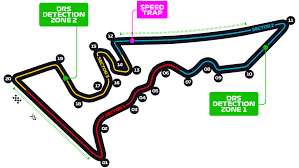
The entire narrative began to change with one, wildly ambitious bet. In 2012, a brand-new, purpose-built, $400 million track opened outside Austin, Texas. The Circuit of the Americas (COTA) was not a temporary street circuit; it was a permanent, FIA Grade 1 temple to motorsport.
It was designed to be the "Greatest Hits" of F1 tracks. It had:
- Turn 1: A blind, 133-foot uphill climb that became an instant-classic, iconic corner.
- The "Esses": A high-speed, "Senna-S" style sector modeled after Silverstone’s Maggots/Becketts complex.
- A "Hockenheim" Section: A stadium section built for close racing.
It was, in short, the first real F1 track built in America. It was a track for purists. It was designed for racing, not just for a parade.
And for its first few years, it was a modest success. It was a "nice-to-have" race on the calendar, a foothold in a hostile market. But it was not, in itself, a revolution. The revolution needed a catalyst.
That catalyst arrived in 2017, when an American company, Liberty Media, bought Formula 1. They threw out the entire, dusty, "keep-out" playbook of former boss Bernie Ecclestone and replaced it with a single, American-style idea: "Fans First."
They opened up social media. They focused on the drivers. And they signed the deal that changed everything: Netflix’s Drive to Survive.
Part 3: The "DTS" Boom and the "Festival-ization" of COTA
Drive to Survive (DTS) cannot be overstated. It was the Trojan Horse that finally breached the American market. It did this by ignoring the one thing F1 had always tried to sell: the technology.
DTS did not sell "F1." It sold People.
It sold the Shakespearean drama of team principals. It sold the bitter rivalries of young, charismatic drivers. It created "characters" (like Guenther Steiner), "heroes," and "villains." For the first time, an American audience was given the human stakes.
Suddenly, a new, younger, and more diverse audience was hooked. They had their "teams" and their "guys." And where did they want to go to see this new drama play out?
COTA.
The 2021 US Grand Prix at COTA was the "Big Bang" of F1's new American era. It was the first race after the post-COVID "DTS" boom. And the numbers were staggering. A record-breaking 400,000 people flooded the circuit over the weekend. It was the largest F1 crowd in history at that time.
But COTA’s organizers had done something brilliant. They hadn't just sold a race. They had sold a festival.
They understood the American consumer. They realized that for $200, a three-hour race wasn't enough. So they turned the Grand Prix into a three-day entertainment spectacle. They booked Taylor Swift. They booked Bruno Mars. They booked P!nk.
COTA wrote the playbook. They proved the "Festival Model": Come for the concert, stay for the race.
The 400,000-person crowd in 2021 proved the model worked. It sent a shockwave through the F1 paddock. It proved, definitively, that America was not just "cracked"; it was a goldmine. This single event is the reason Miami and Las Vegas exist.
Part 4: The Three-Pillar American Empire (The 2034 Thesis)
The 10-year COTA extension is the final piece of a brilliant, three-pillar strategy by Liberty Media to conquer and hold the American market. Each pillar serves a distinct, critical purpose.
Pillar 1: MIAMI (The Corporate "Super Bowl")
- Purpose: Celebrity and Brand.
- Model: This is F1’s "Super Bowl." It’s an "event" in a key corporate market. It is designed to be a "destination," a "place to be seen." The entire weekend is a massive trade show for high-end sponsors, a rolling party for celebrities, and a platform for brands like IWC, Puma, and crypto companies to activate their partnerships. The "race" is just the anchor for the party.
Pillar 2: LAS VEGAS (The "Spectacle" of Entertainment)
- Purpose: The Show.
- Model: This is F1’s "Disneyland." It is pure, unadulterated entertainment, so vital to F1’s brand that Liberty Media itself is the promoter, investing over half a billion dollars in the event. A Saturday night race, on the Strip, under the lights... it's a living, breathing advertisement. It's a statement to the world that F1 is not a "sport"; it's a global entertainment property.
Pillar 3: AUSTIN (The "Anchor" of Authenticity)
- Purpose: The Fans and The Racing.
- Model: This is F1’s "Silverstone" or "Monza" of America. This is the "Anchor." With Miami and Vegas being temporary, logistically-nightmarish street circuits, COTA is the permanent, purpose-built track.
The 10-year deal for COTA is Liberty Media's admission that the *glitz of Miami and Vegas only works if it is anchored by the authenticity of COTA. You can't have a sport built only on spectacle. You need a soul. You need a home.
The 2034 deal makes COTA that home.
Part 5: The Business of a 10-Year Deal
A 10-year contract in Formula 1 is almost unheard of. It is a profound strategic commitment that has massive business implications.
1. A "Blue Chip" Asset for F1: F1 is now a publicly-traded company (FWONK). This 10-year deal turns the US Grand Prix from a "promoted event" into a guaranteed, long-term, "blue-chip" revenue stream. It gives Wall Street and investors a decade of certainty. COTA is a cash-printing machine—it's a sold-out, 400,000+ person event every single year. Locking that in until 2034 is a spectacular business move.
2. A "Threat" to Europe's Heartland: This deal is a terrifying signal to the "classic" European tracks. While COTA gets a 10-year deal, historic tracks like Monza (Italy), Spa (Belgium), and Silverstone (UK) are forced to fight for 2- or 3-year contracts. Tracks with even more history, like the Hockenheimring in Germany, are off the calendar entirely because they can't afford the sky-high hosting fees.
The 2034 deal confirms a permanent power shift. F1’s center of gravity is no longer in Europe. It is in the Americas and the Middle East, where the money, the new fans, and the long-term, government-backed deals are.
3. The Foundation for American Talent: This three-race, long-term strategy provides the commercial foundation needed to finally get an American driver and a top-tier American team on the grid. With a stable, 10-year US presence, sponsors are more willing to back American drivers (like Logan Sargeant), and new American teams (like Andretti) have a far stronger business case for why they should be allowed to join the sport.
Conclusion: The Declaration of Permanence
The 2034 contract extension for the US Grand Prix in Austin is not just a press release. It is the final signature on Formula 1's American conquest.
It is a reward for COTA, the track that took the first, lonely risk. It is a reward for the "Festival Model" that COTA pioneered, the very model that proved 400,000 Americans would show up and make F1 a cultural phenomenon.
And most importantly, it is the "anchor" that holds the entire, glittering American empire together. While Miami provides the sizzle and Vegas provides the show, Austin provides the substance. It is the home base, the "purist's" race, and the soul of the sport in a new land.
Liberty Media has proven its thesis. F1 is not just "visiting" America. With this 10-year deal, it has declared that it now lives here.